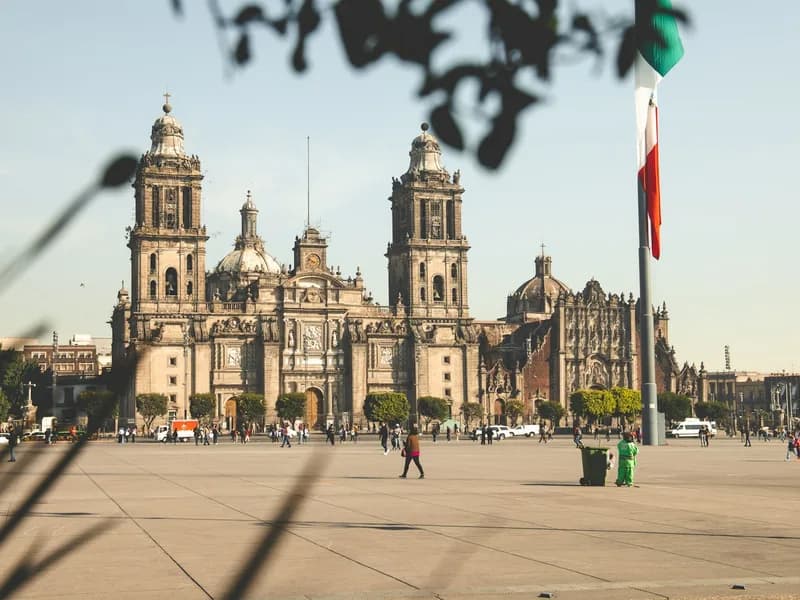
Getting around Mexico's transport network can feel overwhelming at first—the country sprawls across 1.96 million square kilometers with everything from Caribbean islands to mountain villages to sprawling cities. But once you understand your options, navigating Mexico becomes straightforward, affordable, and often surprisingly comfortable.
Key Takeaways
| Question | Answer |
|---|---|
| What is the cheapest way to travel between cities? | First-class buses (ADO, Primera Plus) cost MXN 200–800 ($12–48 USD) for most routes |
| How much do domestic flights cost? | Budget airlines offer flights from MXN 800–2,500 ($48–150 USD) one-way; book 2–4 weeks ahead |
| Is it safe to use public transport? | Yes; first-class buses and official taxis are generally safe. Avoid unmarked taxis and late-night travel |
| What should I book in advance? | Long-distance buses during holidays; domestic flights 3–4 weeks ahead; ferry tickets to islands 1–2 weeks ahead |
| Can I rent a car? | Yes, but driving in Mexico requires an International Driving Permit, valid passport, and credit card. Toll roads are common |
| How do I get around cities? | Metro (Mexico City), buses, colectivos (shared vans), taxis, and ride-sharing apps like Uber |
1. Long-Distance Buses: The Backbone of Mexico Travel
Mexico's bus network is extensive, reliable, and the most economical way to travel between cities. First-class and deluxe buses connect virtually every destination, with comfortable seating, air conditioning, and onboard amenities. Our team has spent considerable time on Mexico's highways, and the quality of first-class services rivals many international standards.
The main carriers are ADO (Autobuses de Oriente), Primera Plus, Greyhound Mexico, and regional operators. ADO is the largest and most widespread, operating routes across the country. When we traveled from Mexico City to Oaxaca, the ADO service included reclining seats, a bathroom, and complimentary snacks—all for under MXN 500 ($30 USD).
Booking and Pricing
First-class buses (Primera Clase) cost between MXN 200–800 ($12–48 USD) depending on distance and season. A Mexico City to Cancún route (1,550 km) typically costs MXN 700–900 ($42–54 USD) for first-class. Deluxe services (Ejecutivo or Premium) add amenities like wider seats and meal service, costing 20–40% more.
- Peak booking times: Book 2–3 weeks ahead during Mexican holidays (Semana Santa in March/April, Christmas, Day of the Dead in November)
- Off-season savings: Travel in May–August or September for better availability and lower prices
- Cancellation policy: Most carriers allow free cancellation up to 24 hours before departure; check when booking
- Luggage: First-class buses include 2 checked bags; excess baggage costs MXN 50–100 ($3–6 USD) per item
Best Routes and Travel Times
During our research in May, we found that routes like Mexico City to Guadalajara (7 hours, MXN 400–600) and Cancún to Playa del Carmen (45 minutes, MXN 50–100) run frequently throughout the day. The Mexico City to Oaxaca route (6 hours, MXN 450–650) is popular with travelers exploring the southern highlands and nearby archaeological sites like Monte Albán.
Book buses, trains, ferries, and transfers between Thai cities easily online. Compare routes and prices.
Book Transport on 12Go → Scan me
2. Domestic Flights: Speed and Value
Domestic flights in Mexico are surprisingly affordable and often faster than buses for long distances. Budget carriers like Volaris, Interjet, and Viva Aerobus compete aggressively on price, while full-service airlines like Aeromexico and United offer more flexibility.
A flight from Mexico City to Cancún (1,500 km) takes 2 hours by air versus 20+ hours by bus. Budget flights cost MXN 800–2,500 ($48–150 USD) one-way when booked 3–4 weeks in advance. Our team found that booking Tuesday through Thursday typically yields better prices than weekend bookings.
Booking Strategy and Hidden Costs
Book domestic flights 3–4 weeks ahead for the best prices. Budget airlines charge extra for carry-on bags, seat selection, and checked luggage. A Volaris flight from Mexico City to Cancún might advertise MXN 899 ($54 USD), but add MXN 300–500 ($18–30 USD) for a checked bag and seat selection.
- Baggage allowance: Budget carriers include 1 personal item only; checked bags cost MXN 200–400 ($12–24 USD)
- Seat selection: MXN 100–300 ($6–18 USD) for preferred seating on budget airlines
- Cancellation: Non-refundable tickets are standard; flexible tickets cost 30–50% more
- Airport transfers: Budget 30–60 minutes for airport arrival before domestic flights
Major Routes and Flight Times
Mexico City to Cancún (2 hours), Mexico City to Los Cabos (2.5 hours), and Cancún to Cozumel (45 minutes) are the busiest routes. During high season (December–March), book these routes weeks ahead. In May, availability is excellent and prices drop 20–30%.
Did You Know? Mexico has 61 commercial airports, but just five handle the majority of international and domestic traffic: Mexico City (MEX), Cancún (CUN), Guadalajara (GDL), Monterrey (MTY), and Los Cabos (SJD).
3. Ferries and Water Transport
Mexico's Caribbean and Pacific coasts offer ferry services to islands and coastal towns. The most popular routes connect the Riviera Maya mainland to Cozumel, Isla Mujeres, and Playa del Carmen.
Ferries from Playa del Carmen to Cozumel run hourly, taking 45 minutes, and cost MXN 250–400 ($15–24 USD) for a standard ticket. Premium seating and express ferries cost MXN 600–800 ($36–48 USD). During our May visit to the Riviera Maya, we found ferries less crowded than during winter months, making it easier to book same-day tickets.
Ferry Routes and Booking
Book ferry tickets 1–2 weeks ahead during high season (December–March). Off-season travel (May–November) allows walk-up bookings at ticket booths near departure points. The Cancún to Isla Mujeres ferry (20 minutes, MXN 200–350 / $12–21 USD) is the shortest and most frequent route.
- Cozumel routes: Playa del Carmen to Cozumel (45 min, MXN 250–400), Cancún to Cozumel (1 hour, MXN 300–500)
- Isla Mujeres: Cancún to Isla Mujeres (20 min, MXN 200–350), Puerto Juárez to Isla Mujeres (25 min, MXN 150–250)
- Pacific ferries: Limited service; check locally in Baja California Sur and Nayarit
- Luggage: Most ferries include baggage; excess items cost MXN 50–100 ($3–6 USD)
Book ferries early in the day to avoid afternoon cancellations due to rough seas, especially during the rainy season (May–October).
4. Car Rentals and Driving in Mexico
Renting a car gives flexibility for exploring regions like the Yucatán Peninsula, Oaxaca, and Baja California. However, driving in Mexico requires preparation, understanding toll roads, and familiarity with local driving customs.
To rent a car, you need a valid passport, an International Driving Permit (IDP), a major credit card, and a valid driver's license from your home country. Most rental agencies require drivers to be at least 25 years old; under-25 rentals incur a young driver surcharge of MXN 200–400 ($12–24 USD) per day.
Rental Costs and Insurance
Economy car rentals cost MXN 400–800 ($24–48 USD) per day from major agencies like Hertz, Avis, and Budget. Local agencies sometimes offer lower rates (MXN 250–500 / $15–30 USD), but verify insurance coverage carefully. Comprehensive insurance (Collision Damage Waiver) costs MXN 150–300 ($9–18 USD) per day and is strongly recommended.
- Fuel costs: Gasoline (gasolina) costs approximately MXN 20–24 per liter ($1.20–1.45 USD). A full tank costs MXN 400–600 ($24–36 USD)
- Toll roads (cuotas): Major highways charge tolls: Mexico City to Querétaro (MXN 300–400 / $18–24 USD), Mexico City to Veracruz (MXN 600–800 / $36–48 USD)
- Parking: Hotel parking is often free; street parking in cities costs MXN 20–50 ($1.20–3 USD) per hour
- Driving hours: Avoid driving at night; highways are safer during daylight hours
Driving Conditions and Safety
During our research, we found that major highways (cuotas) are well-maintained and relatively safe. Secondary roads vary in condition. Speed limits are 110 km/h on highways, 90 km/h on secondary roads, and 40 km/h in cities. Police checkpoints are common; keep your documents accessible.
Did You Know? Mexico's highway system includes over 400,000 km of roads, but only about 8% are toll highways (cuotas). Toll roads are generally safer and better maintained than free roads.
Source: Secretaría de Infraestructura, Comunicaciones y Transportes
5. Taxis, Ride-Sharing, and City Transport
Getting around cities requires different strategies depending on location and time of day. Mexico City, Cancún, and Guadalajara have modern metro systems and extensive bus networks, while smaller cities rely on taxis and colectivos (shared vans).
Uber and Didi operate in major cities and are generally safer than street hailing. Uber rides in Mexico City cost MXN 40–150 ($2.40–9 USD) for short trips; Cancún rides are slightly more expensive at MXN 50–200 ($3–12 USD). When we used Uber in Mexico City during evening hours, drivers were professional and routes were efficient.
Metro Systems and Public Buses
Mexico City's Metro is the second-largest in North America and costs just MXN 5 ($0.30 USD) per ride. The system has 12 lines covering 226 km, making it the fastest way to navigate the capital. Buses cost MXN 6–8 ($0.36–0.48 USD) per ride and cover areas the Metro doesn't reach.
Cancún has a bus system (ADO and local operators) costing MXN 10–15 ($0.60–0.90 USD) per ride. Guadalajara's Trolebús and bus system is affordable and extensive. Smaller cities like Oaxaca and San Cristóbal rely on buses and taxis; expect to pay MXN 8–15 ($0.48–0.90 USD) for a bus ride and MXN 30–80 ($1.80–4.80 USD) for a short taxi ride.
- Colectivos: Shared vans cost MXN 5–15 ($0.30–0.90 USD) and run fixed routes; flag them down on the street
- Taxis: Metered taxis in major cities cost MXN 20–30 ($1.20–1.80 USD) base fare plus MXN 2–3 ($0.12–0.18 USD) per km
- Ride-sharing safety: Use Uber/Didi in major cities; verify driver details before entering
- Night transport: Avoid unmarked taxis late at night; use ride-sharing apps instead
Get a Thailand eSIM before you land. No physical SIM needed — activate instantly on your phone.
Get Saily eSIM for Thailand → Scan me
6. Regional Transport: Specific Routes and Costs
Understanding popular routes helps you plan multi-city itineraries efficiently. The Riviera Maya, Oaxaca, and northern Mexico each have distinct transport patterns.
Riviera Maya and Caribbean Coast
The Riviera Maya (Cancún, Playa del Carmen, Tulum) is well-connected by buses and ferries. ADO buses run hourly from Cancún to Playa del Carmen (45 minutes, MXN 50–100 / $3–6 USD) and Tulum (2 hours, MXN 100–150 / $6–9 USD). Our team found that traveling between these towns is straightforward and affordable, making it ideal for multi-destination trips.
Ferries connect the mainland to Cozumel and Isla Mujeres. Booking ferries through your hotel is convenient but costs 10–20% more than buying tickets directly at the dock.
Oaxaca and Southern Mexico
Getting to Oaxaca requires either flying or taking a long bus journey. Mexico City to Oaxaca by bus takes 6–7 hours (MXN 450–650 / $27–39 USD). Flying takes 1 hour but costs MXN 1,500–3,000 ($90–180 USD) when booked in advance. Once in Oaxaca, local buses and colectivos cost MXN 8–15 ($0.48–0.90 USD) per ride.
Exploring nearby archaeological sites like Monte Albán requires either hiring a taxi (MXN 300–500 / $18–30 USD for a half-day) or joining a tour. Our research found that group tours cost MXN 400–600 ($24–36 USD) and include transportation and a guide.
Northern Mexico and Border Regions
Monterrey, Guadalajara, and Ciudad Juárez are major transport hubs. Buses between these cities cost MXN 400–900 ($24–54 USD) depending on distance. Driving is popular in the north; highways are well-maintained but toll roads are frequent. The Mexico City to Monterrey route (900 km) costs MXN 700–1,000 ($42–60 USD) by bus or MXN 1,200–2,500 ($72–150 USD) by flight.
7. Booking Platforms and Practical Tips
Knowing where and how to book saves money and prevents frustration. Each transport type has preferred booking channels.
Bus Booking
ADO's official website (ado.com.mx) and the Ticketbus platform allow direct booking with no intermediary fees. Booking 2–3 weeks ahead for long-distance routes yields the best prices. During holidays (Semana Santa, Christmas, Day of the Dead), book 4–6 weeks ahead or expect higher prices and limited availability.
When we booked a Mexico City to Oaxaca bus during May, prices were MXN 450–550 ($27–33 USD). The same route during Easter week would cost MXN 650–800 ($39–48 USD) and sell out quickly.
Flight Booking
Google Flights, Skyscanner, and airline websites (Volaris, Interjet, Aeromexico) allow price comparison. Set up price alerts 6–8 weeks before your travel dates. Budget airlines often have flash sales on Tuesday/Wednesday; signing up for newsletters helps you catch these deals.
Ferry and Activity Booking
Ferry tickets are best booked directly at ticket offices or through your hotel 1–2 weeks ahead. For activities like cenote tours or archaeological site visits, platforms like Klook and GetYourGuide offer convenient booking with pickup from major hotels.
Skip the hassle — book Thailand day trips, cooking classes, and experiences in advance with instant confirmation.
Browse Activities on Klook → Scan me
8. Safety, Timing, and Practical Considerations
Understanding safety concerns and timing logistics ensures smooth travel. Mexico's transport system is generally safe when you follow basic precautions.
Safety on Public Transport
First-class buses and official taxis are safe. Avoid unmarked taxis, especially late at night; use Uber or Didi instead. During our May travels, we found that traveling during daylight hours and using established transport companies eliminated safety concerns entirely.
In Mexico City, the Metro is safe during daytime and early evening but becomes crowded during rush hours (7–9 AM, 5–7 PM). Avoid traveling with expensive jewelry, cameras, or large amounts of cash visible. Keep bags in front of you on crowded buses.
Best Times to Travel
Travel between cities during daylight hours when possible. Most long-distance buses depart in the evening (6 PM–midnight) and arrive early morning; overnight travel is common and generally safe on first-class buses. However, if you prefer daytime travel, morning departures (6–9 AM) are available on most routes.
During the rainy season (May–October), ferry services may experience delays or cancellations. Our team recommends booking ferries early in the day to avoid afternoon weather-related cancellations.
Luggage and Valuables
Keep valuables in your carry-on bag, not checked luggage. Buses and ferries are generally secure, but petty theft occurs at terminals. Avoid leaving bags unattended. When renting a car, never leave items visible in the vehicle; use the trunk or take valuables with you.
9. Comparing Transport Options: Cost and Time Analysis
| Route | Transport | Duration | Cost (USD) | Best For |
|---|---|---|---|---|
| Mexico City → Cancún | Bus (first-class) | 20–24 hours | $42–54 | Budget travelers, flexible schedules |
| Mexico City → Cancún | Flight (budget) | 2 hours | $48–150 | Time-conscious travelers, booked ahead |
| Cancún → Playa del Carmen | Bus (ADO) | 45 minutes | $3–6 | Day trips, exploring the Riviera Maya |
| Playa del Carmen → Cozumel | Ferry | 45 minutes | $15–24 | Island exploration, snorkeling |
| Mexico City → Oaxaca | Bus | 6–7 hours | $27–39 | Budget travelers, cultural exploration |
| Mexico City → Oaxaca | Flight | 1 hour | $90–180 | Time-saving, premium experience |
| Cancún → Isla Mujeres | Ferry | 20 minutes | $12–21 | Quick island getaway, day trips |
10. Planning Your Mexico Transport Itinerary
Building a multi-city trip requires understanding connections and timing. A typical two-week Mexico itinerary might combine Mexico City, the Riviera Maya, and Oaxaca.
Sample Itinerary:
- Days 1–3: Mexico City (arrive by flight, explore the capital)
- Day 4: Mexico City to Cancún by flight (2 hours, MXN 1,200–2,500 / $72–150 USD)
- Days 5–7: Cancún and Riviera Maya (use buses and ferries for day trips)
- Day 8: Playa del Carmen to Cozumel by ferry (45 minutes, MXN 250–400 / $15–24 USD)
- Days 9–10: Cozumel (ferry back to mainland)
- Days 11–12: Oaxaca (fly from Cancún or Mexico City, MXN 1,500–3,000 / $90–180 USD)
- Day 13: Return to Mexico City by bus or flight
This itinerary balances flying (for long distances) with buses and ferries (for short hops), keeping costs reasonable while maximizing time in each destination.
During our May research, we found that booking flights 4 weeks ahead and buses 2–3 weeks ahead provided flexibility without premium pricing. Traveling in May also meant fewer crowds and better availability than peak season.
Compare hotels, resorts, and guesthouses across Thailand with free cancellation on most bookings.
Search Hotels on Booking.com → Scan me
Frequently Asked Questions
What is the cheapest way to travel between Mexican cities?
First-class buses are the most economical option for distances over 300 km. A Mexico City to Guadalajara bus costs MXN 400–600 ($24–36 USD) versus MXN 1,500–2,500 ($90–150 USD) for a flight. Buses take longer (7–8 hours vs. 1 hour) but are significantly cheaper and offer comfortable seating on first-class services.
Do I need an International Driving Permit to rent a car in Mexico?
Yes, an International Driving Permit (IDP) is required along with your valid passport and home country driver's license. You can obtain an IDP from your country's automobile association before traveling. Rental agencies will not rent to you without all three documents.
Are Mexican buses safe for solo travelers?
Yes, first-class buses operated by ADO, Primera Plus, and similar carriers are safe for solo travelers. They're well-maintained, have security measures, and are used by locals regularly. Avoid second-class buses (Autobús de Segunda) if you're concerned about safety; first-class is worth the extra cost.
How far in advance should I book domestic flights?
Book 3–4 weeks ahead for the best prices on budget airlines. Booking 6–8 weeks ahead can yield even better deals on promotional fares. Last-minute bookings (1–2 weeks ahead) cost 30–50% more. Avoid booking less than 1 week before departure unless you're flexible on price.
Can I use my phone for navigation while driving in Mexico?
Yes, Google Maps and Waze work well in Mexico. However, download offline maps before traveling to remote areas where cell service may be spotty. Keep your phone mounted and avoid using it while driving. Many rental cars include GPS units; ask when booking.
What is the best way to get from the airport to my hotel?
In major cities (Mexico City, Cancún, Guadalajara), use Uber or Didi for safety and reliability. Costs are typically MXN 100–300 ($6–18 USD) depending on distance. Avoid unmarked taxis at the airport; use official taxi stands or ride-sharing apps. Some hotels offer airport transfers; ask when booking.
Are ferries reliable during the rainy season?
Ferries operate year-round but experience occasional delays or cancellations during the rainy season (May–October) due to rough seas. Book ferries early in the day to minimize weather-related cancellations. Check weather forecasts before booking and have flexible plans for alternative transport if needed.
Conclusion
Getting around Mexico is straightforward once you understand your options. First-class buses offer the best value for long distances, domestic flights save time when booked in advance, and ferries provide access to islands and coastal towns. Our research confirms that combining these transport methods—flying for distances over 1,000 km, busing for medium distances, and using local transport in cities—creates an efficient, affordable itinerary.
For detailed planning and current pricing, visit our comprehensive Mexico travel guide or explore specific destinations like the Riviera Maya and Oaxaca. Book transport 2–4 weeks ahead during high season, stay flexible on dates when possible, and prioritize first-class services for comfort and safety.
We may earn a small commission from bookings made through our links, at no extra cost to you. This helps us keep creating free travel guides.
Safe travels, and enjoy exploring Mexico's incredible diversity!