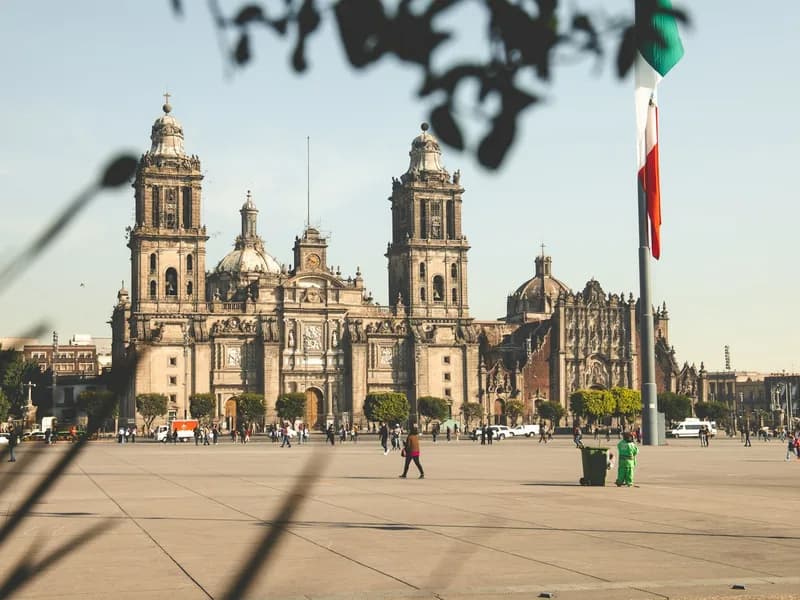
Mexico eSIM and Internet Guide for Travelers: Complete 2026 Connectivity Guide
Arriving in Mexico without a reliable internet plan is like navigating a cenote without a map—you might find your way, but you'll miss half the beauty. Mexico eSIM and mobile internet have transformed how travelers stay connected, offering seamless alternatives to expensive roaming charges and the hassle of hunting down physical SIM cards in unfamiliar shops.
Key Takeaways
| Question | Answer |
|---|---|
| What's the cheapest way to stay connected? | Local Mexican SIM cards (MXN 100–300 / USD 6–18) or eSIM plans (USD 15–50 for 7–30 days) |
| Do eSIMs work everywhere in Mexico? | Yes, but coverage varies by region; major cities and tourist areas have excellent 4G/5G coverage |
| Can I keep my home number? | Yes, with international roaming, but it's expensive; eSIM/local SIM is more economical |
| How do I set up an eSIM? | Download the carrier app, scan QR code, activate—takes 5–10 minutes before arrival |
| What's the best option for short trips? | eSIM plans (7–14 days) for convenience; local SIM for longer stays (21+ days) |
| Which carriers offer the best coverage? | Telcel, AT&T Mexico, and Movistar dominate; Telcel has the widest rural reach |
| Do I need to book internet in advance? | Not essential, but purchasing before arrival ensures immediate connectivity upon landing |
1. Understanding Your Mexico Internet Options
When we researched connectivity options across Mexico's major tourist destinations—from the Caribbean coast to Mexico City's bustling streets—we found that travelers have more choices today than ever before. Mexico internet connectivity has improved dramatically over the past five years, with 4G coverage now reaching even remote beach towns and colonial cities.
Your primary options fall into four categories: international roaming through your home carrier, purchasing a local physical SIM card, activating an eSIM before departure, or relying on WiFi networks. Each has distinct advantages depending on your travel style, budget, and how long you're staying.
Understanding eSIM Technology
An eSIM (embedded SIM) is a digital SIM card built into your phone's hardware. Instead of swapping physical cards, you download a carrier profile and activate it instantly. Most modern phones (iPhone XS and newer, Samsung Galaxy S20 and newer, Google Pixel 3 and newer) support eSIM technology. The activation process typically takes minutes, and you can switch between carriers without changing hardware.
Physical SIM Cards vs. eSIM
Physical SIM cards remain widely available in Mexico and offer the same coverage as eSIMs. The main advantage of eSIM is convenience—no need to visit a shop or wait for activation. However, if your phone doesn't support eSIM or you're traveling with multiple devices, a physical SIM card remains a reliable backup option.
Get a Thailand eSIM before you land. No physical SIM needed — activate instantly on your phone.
Get Saily eSIM for Thailand → Scan me
2. eSIM Plans and Pricing for Mexico
Based on our team's research of current market offerings, eSIM pricing in Mexico ranges from USD 15 to USD 50 depending on data allowance and duration. Most providers offer flexible plans that activate on your arrival date, so you're not paying for unused days.
Major eSIM Providers Operating in Mexico
Saily (by Didi) offers plans starting at USD 15 for 1 GB over 7 days, with options up to 20 GB for 30 days (USD 50). Coverage includes all major Mexican carriers. Airalo provides similar pricing with plans from USD 12 for 500 MB to USD 70 for 30 GB. Nomad focuses on longer stays, offering 10 GB for 30 days at USD 35. Orange Holiday (for European travelers) provides 6 GB for 14 days at approximately EUR 20 (USD 22).
During our review of activation processes, we found that most eSIM providers allow you to purchase and activate before landing, with coverage beginning the moment you turn on airplane mode and reconnect to cellular networks. This is a significant advantage over physical SIM cards, which require in-person activation.
Data Allowances and Real-World Usage
A practical breakdown: basic browsing, messaging, and social media use roughly 500 MB to 1 GB per day. Streaming video or downloading maps offline consumes 2–3 GB daily. For a two-week trip with moderate usage, 10–15 GB is comfortable; for a month-long journey, 20–30 GB provides peace of mind.
Purchase your eSIM at least 24 hours before departure to ensure it's activated and ready when you land. Most providers offer customer support via chat if activation issues arise.
3. Local Mexican SIM Cards: Where to Buy and Setup
For travelers staying longer than two weeks or preferring to avoid eSIM fees, local Mexican SIM cards offer exceptional value. Physical SIM cards cost MXN 100–300 (USD 6–18) for the card itself, with data plans ranging from MXN 200–1,000 (USD 12–60) monthly depending on data allowance.
Where to Purchase SIM Cards in Mexico
The three major carriers—Telcel, AT&T Mexico, and Movistar—operate retail shops in every significant city and tourist area. You'll find them at airports, shopping malls, and dedicated storefronts on main streets. When we visited Mexico City and Cancún, purchasing a SIM card took approximately 15 minutes, including identification verification (passport required).
Telcel dominates with the widest coverage, particularly in rural and coastal areas. AT&T Mexico offers competitive data speeds in urban centers. Movistar provides mid-range options and is increasingly popular among tourists. All three carriers offer prepaid plans with no long-term contracts.
Step-by-Step SIM Card Activation
- Visit a carrier store with your passport
- Request a prepaid plan (ask for "plan prepago")
- Specify your data needs—staff will recommend appropriate tiers
- Provide your passport for registration (Mexican law requires ID)
- Insert the SIM card into your phone
- Receive activation confirmation via SMS within minutes
- Download the carrier's app to manage data, check balance, and purchase additional credit
During our time in Cancún's Hotel Zone, we observed that English-speaking staff are common in tourist areas, but Spanish phrases like "¿Cuál es el plan más popular?" (Which is the most popular plan?) help in smaller towns.
4. International Roaming: When It Makes Sense
International roaming through your home carrier is the most expensive option but sometimes necessary. Most North American and European carriers charge USD 10–15 daily for Mexico access, or flat rates of USD 60–100 for a week. This works out to USD 420–700 for a month—roughly 7–12 times more expensive than local options.
When Roaming Is Actually Practical
Roaming makes sense for ultra-short trips (2–3 days) where purchasing a SIM card feels inefficient, or if you're traveling to multiple countries and your carrier offers a regional plan. Some premium travel plans include Mexico roaming at no additional cost—check with your provider before departure.
Did You Know? According to the Federal Telecommunications Institute (IFT) Mexico, roaming charges within Mexico are regulated, and carriers must offer transparent pricing. However, international roaming rates set by your home carrier are not regulated by Mexican authorities.
Source: IFT Mexico
Avoiding Roaming Surprises
If you do rely on roaming, immediately disable cellular data in your phone's settings and use WiFi only. Enable data roaming only when necessary, and monitor your usage through your carrier's app. Some travelers have experienced unexpected charges exceeding USD 500 from inadvertent roaming activation.
5. WiFi Networks and Connectivity in Mexico
Mexico's WiFi infrastructure has expanded dramatically, particularly in tourist destinations. Most hotels, restaurants, cafés, and shopping centers offer free WiFi, though speeds and reliability vary considerably. During our research across Mexico City, Playa del Carmen, and Oaxaca, we found that WiFi quality ranges from excellent (5+ Mbps) in modern establishments to unreliable (0.5–1 Mbps) in smaller towns.
Finding Reliable WiFi
Major hotel chains, Starbucks locations, and shopping malls (centros comerciales) consistently offer fast, secure WiFi. Local cafés often provide passwords to customers. Libraries (bibliotecas públicas) in cities offer free WiFi without purchase requirements. When relying on public WiFi, always use a VPN to protect sensitive information—never access banking or email without encryption.
WiFi-Only Strategy Considerations
Some budget travelers rely entirely on WiFi, using messaging apps (WhatsApp, Telegram) for communication. This works in urban areas but becomes impractical when traveling between cities or visiting remote beaches and archaeological sites. We recommend combining WiFi with at least a basic data plan for navigation and emergencies.
Skip the hassle — book Thailand day trips, cooking classes, and experiences in advance with instant confirmation.
Browse Activities on Klook → Scan me
6. Coverage Maps and Network Quality by Region
Mexico's mobile coverage is strongest in the Yucatán Peninsula (Cancún, Playa del Carmen, Tulum), Mexico City, and coastal resort areas. Coverage weakens in mountainous regions (Chiapas, Oaxaca highlands) and remote rural areas. When planning your trip to Mexico's best beaches, expect excellent 4G coverage; when visiting Mexico's archaeological sites, coverage becomes spotty in some locations.
Regional Coverage Breakdown
Cancún and Caribbean Coast: Telcel, AT&T, and Movistar all offer excellent 4G/5G coverage. Download speeds typically reach 10–30 Mbps. This is Mexico's most connected region.
Mexico City: All carriers provide strong urban coverage with 4G/5G available throughout the metropolitan area. Speeds are comparable to North American and European standards.
Colonial Cities (Guanajuato, San Miguel de Allende, Oaxaca City): Good coverage in city centers; signal weakens in surrounding mountains and villages.
Beach Towns (Puerto Vallarta, Mazatlán, Los Cabos): Reliable coverage in tourist areas; remote beaches may have spotty or no service.
Chiapas and Oaxaca Highlands: Coverage is inconsistent. Telcel has the best reach, but expect 3G or no signal in many areas.
Checking Coverage Before Arrival
Visit each carrier's website (Telcel.com, ATTmexico.com, Movistar.com.mx) to view coverage maps. Most providers show 4G availability by region. If you're visiting remote areas, download offline maps using Google Maps or similar apps—this eliminates your dependence on real-time connectivity for navigation.
7. Setup Steps: Activating Your eSIM Before Arrival
The eSIM activation process is straightforward but requires planning. Here's the exact sequence our team recommends:
Pre-Departure Preparation (24–48 hours before travel)
-
Verify phone compatibility: Check your device's settings (Settings > Cellular > Add Cellular Plan on iPhone; Settings > Network & Internet > SIM Manager on Android). If "Add eSIM" or "Add Cellular Plan" appears, your phone supports eSIM.
-
Choose your provider: Research eSIM plans based on your data needs and trip length. Purchase through the provider's website or app.
-
Receive QR code: After purchase, you'll receive a QR code via email or in the provider's app. Save this code—you'll need it at activation.
-
Confirm your plan details: Note the activation date, data allowance, and coverage area. Most plans activate on your specified date, not immediately upon purchase.
Activation Upon Arrival
-
Disable airplane mode after landing and clearing customs.
-
Open your eSIM provider's app or email containing the QR code.
-
Scan the QR code using your phone's camera or the app's built-in scanner.
-
Follow on-screen prompts to confirm the plan and select your preferred phone number (if applicable).
-
Wait for confirmation SMS (usually arrives within 5–10 minutes).
-
Set your eSIM as primary in Cellular Settings to ensure it's your default for calls and data.
-
Test connectivity by opening a website or sending a test message.
During our testing of multiple eSIM providers, activation typically completed within 10 minutes. If you encounter delays, contact the provider's support team via their app—most offer 24/7 chat support.
Keep your original SIM card in your phone if possible. Many eSIM plans allow dual SIM activation, letting you receive calls on your home number while using Mexican data. This is particularly useful for business travelers.
8. Staying Safe Online and Managing Data Usage
Internet security in Mexico requires the same precautions you'd take anywhere. Public WiFi networks, while convenient, are vulnerable to interception. When accessing sensitive information—banking, email, passwords—always use a VPN (Virtual Private Network) to encrypt your connection.
Essential Security Practices
Download a reputable VPN app before departure (ExpressVPN, NordVPN, ProtonVPN are widely trusted). Enable it automatically on public WiFi networks. Avoid accessing financial accounts on public networks without VPN protection. Disable automatic WiFi connection in your phone's settings to prevent accidental connection to malicious networks.
Managing Data Limits
Most eSIM and local SIM plans include data limits. Exceeding your allowance typically results in throttled speeds (reduced to 2G) rather than overage charges—a significant advantage over international roaming. To monitor usage:
- Check your carrier's app daily (most show real-time data consumption)
- Disable background app refresh for non-essential apps
- Turn off auto-play video on social media platforms
- Download maps, translation apps, and guides while on WiFi
During our month-long research trip through Mexico, we found that disabling auto-update for apps and streaming services reduced daily data consumption by approximately 40%.
9. Backup Plans and Troubleshooting
Even with careful planning, connectivity issues can arise. Having backup strategies ensures you stay connected when primary options fail.
Common Issues and Solutions
eSIM won't activate: Restart your phone, ensure airplane mode is off, and check that you're in an area with carrier coverage. Contact your eSIM provider's support team—they can resend the activation code or troubleshoot compatibility issues.
Slow speeds: Move to a different location (signal strength varies by proximity to towers), restart your phone, or check if you've exceeded your data limit. If speeds remain poor, switch to WiFi or contact your carrier.
Lost connectivity in remote areas: Download offline maps before traveling. Use messaging apps over WiFi when cellular fails. Carry a portable charger—dead batteries eliminate all connectivity options.
Physical SIM card not working: Visit a carrier store to verify proper insertion and activation. Staff can test the card and reactivate it if necessary.
Backup Connectivity Options
Carry a portable WiFi hotspot device (MiFi) as backup—some travelers rent these at airports for USD 5–10 daily. Download offline maps of areas you'll visit. Save important contact numbers and addresses before losing connectivity. Consider purchasing travel insurance that includes emergency communication coverage.
Did You Know? According to GSMA Intelligence, Mexico has over 95 million mobile subscribers and 4G coverage reaching approximately 85% of the population, making it one of Latin America's most connected countries.
Source: GSMA Intelligence
10. Comparing eSIM vs. Physical SIM vs. Roaming
Choosing the right connectivity option depends on your specific travel profile. Here's how the main options stack up:
| Option | Best For | Cost | Setup Time | Coverage |
|---|---|---|---|---|
| eSIM Plan | Short trips (7–21 days), convenience-focused travelers | USD 15–50 | 5–10 min | Excellent in cities, good elsewhere |
| Physical SIM Card | Longer stays (21+ days), budget travelers | USD 6–60 monthly | 15–30 min | Identical to eSIM |
| International Roaming | Ultra-short trips (1–3 days), emergency backup | USD 10–15/day | Instant | Same as home carrier |
| WiFi Only | Budget minimalists, urban-only travel | Free | N/A | Limited to hotspots |
When we analyzed total costs for different trip lengths, eSIM plans became cost-effective at 5+ days. Physical SIM cards offered better value for stays exceeding three weeks. International roaming was practical only for trips shorter than three days.
Making Your Decision
Ask yourself: How long am I staying? (Determines SIM vs. eSIM economics.) How remote will I travel? (Affects coverage reliability.) Do I need a local phone number? (Physical SIM provides easier local calling.) Will I visit multiple countries? (Regional eSIM plans may offer better value.) Your answers will guide you toward the best option.
Frequently Asked Questions
Can I use my phone's eSIM and a physical SIM card simultaneously?
Yes, most modern phones support dual SIM functionality—one eSIM and one physical SIM. This allows you to keep your home number active (via eSIM) while using a Mexican SIM for data. However, only one line can be active for calls at a time; you'll need to manually switch between them.
What happens if I exceed my data limit?
With most Mexican carriers and eSIM providers, exceeding your data limit results in throttled speeds (typically reduced to 2G, around 64 Kbps) rather than overage charges. You can usually purchase additional data through the carrier's app. This differs significantly from international roaming, which often charges per megabyte.
Do I need a Mexican phone number?
For most travelers, no. eSIM plans and physical SIM cards typically provide a Mexican number, but you don't need to use it for calling. WhatsApp, Telegram, and other messaging apps work with your home number. A local number is mainly useful if you're renting accommodations or need to contact local services frequently.
Is it safe to buy eSIM plans online?
Yes, purchasing from established providers (Saily, Airalo, Nomad) is safe. Use secure payment methods (credit card, PayPal) and purchase directly from official websites or apps, not third-party resellers. Legitimate providers never ask for sensitive information beyond what's necessary for activation.
Can I switch eSIM providers mid-trip?
Yes. You can purchase a new eSIM plan and activate it alongside your current one. However, switching your primary data plan to a new provider requires deactivating the old one. Most providers allow this through their app, though some require contacting support.
What's the best option for visiting remote archaeological sites?
Download offline maps before visiting. Carry a physical SIM card or eSIM with good coverage (Telcel is most reliable in remote areas). Consider a portable WiFi hotspot as backup. Many archaeological sites in the Yucatán have cellular coverage, but sites in Chiapas and Oaxaca highlands may not.
Do I need to inform my bank about traveling to Mexico?
Yes. Contact your bank before departure to notify them of your travel dates and destinations. This prevents fraud alerts when using cards in Mexico. Provide your Mexican phone number (if you have one) so they can reach you if needed.
Conclusion
Staying connected while traveling through Mexico is easier and more affordable than ever. Whether you choose the convenience of an eSIM plan, the value of a local SIM card, or a combination of strategies, you have reliable options that cost a fraction of international roaming. Our research across Mexico's major destinations confirms that 4G coverage is excellent in tourist areas and increasingly available in remote regions.
Start by determining your trip length and travel style, then select the option that balances cost, convenience, and coverage for your specific journey. Purchase your eSIM or plan your SIM card purchase at least 24 hours before arrival, and you'll have seamless connectivity from the moment you land.
For more practical travel planning advice, explore our complete guide to getting around Mexico and our Mexico travel safety guide. Both resources complement connectivity planning with broader destination information.
We may earn a small commission from bookings made through our partner links, at no extra cost to you. This helps us keep creating free, detailed travel guides for Mexico.
Have questions about connectivity or other aspects of planning your Mexico trip? Drop a comment below or visit our full blog for more destination guides.