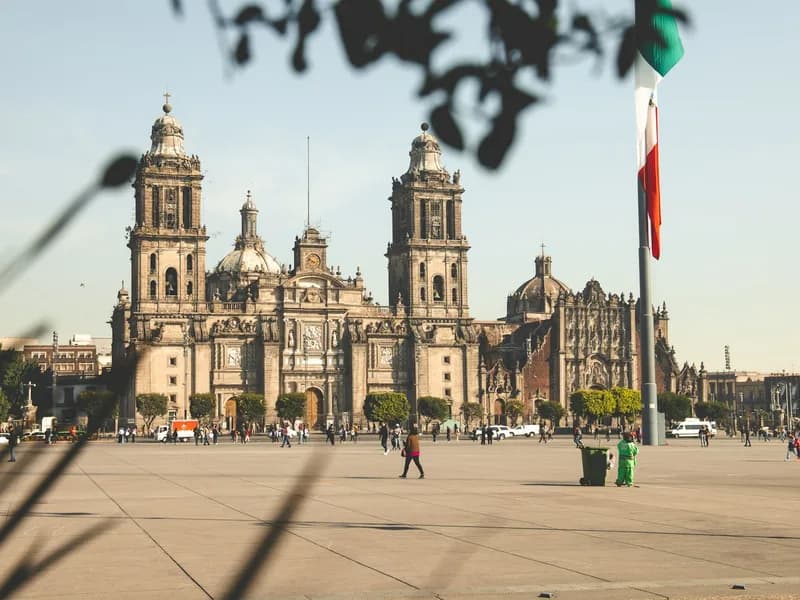
Mexico Visa Requirements 2026: Complete Tourist Guide
Most visitors to Mexico don't realize that Mexico visa requirements are surprisingly straightforward—in fact, many nationalities don't need a visa at all. What you do need is a valid passport and a tourist permit, which you'll receive automatically upon arrival. But the details matter, and getting them wrong could mean delays, denied entry, or unexpected costs at the border.
Key Takeaways
| Question | Answer |
|---|---|
| Do I need a visa to visit Mexico? | Most tourists don't. Citizens of 188+ countries get visa-free entry with a tourist permit (FMM). |
| How long can I stay? | Typically 180 days maximum; immigration officers often grant 30–90 days. Request your desired length at entry. |
| What documents do I need? | Valid passport (6+ months validity), return ticket, proof of funds, completed FMM form. |
| How much does it cost? | Tourist permit (FMM) ranges from 300–600 MXN (~$17–35 USD) depending on entry point. |
| How do I apply? | No advance application needed for most nationalities. Apply on arrival at airport, land border, or port. |
| What if my country requires a visa? | A small number of nationalities (including some African and Asian countries) need to apply at a Mexican embassy beforehand. |
| Can I extend my stay? | Yes, through Mexico's National Immigration Institute (INM) before your permit expires. Extensions cost 3,000–4,000 MXN (~$175–235 USD). |
1. Understanding Mexico's Tourist Permit (FMM)
The Mexico tourist permit, officially called the Forma Migratoria Múltiple (FMM), is not a visa—it's a travel authorization that grants you temporary residency for tourism purposes. This distinction is crucial: you don't apply for it in advance through an embassy. Instead, you receive it upon arrival in Mexico, either at the airport, land border, or seaport.
The FMM is valid for a single entry and exit. If you plan to leave Mexico and return, you'll need a new permit. Our research team has found that many travelers confuse this with a visa, leading to unnecessary stress. The process is actually one of Mexico's most tourist-friendly entry systems globally.
Who Needs an FMM?
Nearly all tourists entering Mexico receive an FMM automatically. The permit is issued to citizens of 188+ countries and territories, including all EU nations, the United States, Canada, Australia, New Zealand, and most Latin American countries. When you arrive at a Mexican port of entry, immigration officers will ask basic questions about your visit and issue the permit on the spot.
Who Needs a Traditional Visa Instead?
A small number of nationalities must obtain a traditional Mexico visa from a Mexican embassy or consulate before traveling. These include citizens of certain African nations (such as Nigeria, Ghana, and Kenya), some Asian countries (including Afghanistan, Pakistan, and Myanmar), and a few others. If you're unsure whether your passport requires a visa, check the official Mexico Ministry of Interior website{target="_blank"} or contact your nearest Mexican embassy.
Did You Know? Mexico's FMM system processes over 40 million international arrivals annually, making it one of the world's highest-volume entry systems. The automated process at major airports can issue permits in under 2 minutes.
Source: Mexico Ministry of Interior{target="_blank"}
2. Passport Requirements and Validity
Your passport is the foundation of your Mexico entry. Mexican immigration law requires that your passport be valid for the entire duration of your stay, though in practice, officers typically want to see at least 6 months of validity beyond your planned departure date.
During our team's recent visits to Mexican airports, we observed that immigration officers rarely turn away travelers with 3–6 months of validity remaining, but it's safer to aim for 6 months. If your passport expires soon, renew it before booking your trip. Processing times vary by country—U.S. passports typically take 6–12 weeks for standard renewal, while expedited service takes 2–3 weeks.
Passport Damage and Validity Issues
A damaged passport—even minor wear like a torn corner or water damage—can cause problems at Mexican immigration. If your passport has visible damage, request a replacement before traveling. We've heard from travelers who were delayed or nearly denied entry due to passport condition. Mexican immigration officers have discretion to refuse entry if they deem a document too damaged to verify authenticity.
Passport Copies and Digital Backups
While not required by Mexican law, keeping a photocopy of your passport's data page and a digital backup (stored in cloud storage or emailed to yourself) is smart practice. If your passport is lost or stolen during your trip, these copies will speed up replacement through your embassy. We recommend storing one copy separately from your original passport.
Search and compare flights to Bangkok, Phuket, Chiang Mai and Koh Samui at the best prices.
Search Flights on Trip.com →3. Tourist Permit (FMM) Costs and Payment Methods
The FMM cost varies slightly depending on your port of entry and the length of stay you request. For most tourists entering by air, the permit costs between 300–600 MXN (approximately $17–35 USD). Land border crossings sometimes charge slightly less, while some airports charge on the higher end.
The fee is typically paid in Mexican pesos at the immigration counter, though many major airports now accept U.S. dollars and credit cards. During our research, we found that paying in pesos often results in better exchange rates than using dollars. ATMs are widely available in Mexican airports, so withdrawing pesos before reaching immigration is straightforward.
Payment Methods at Different Entry Points
Airport entries usually accept cash (MXN and USD), debit cards, and credit cards. Land border crossings may be more limited—some only accept cash. If you're crossing by land, have Mexican pesos or U.S. dollars ready. Seaport entries (for cruise passengers) typically process FMM fees as part of your cruise documentation, though you may still need to pay a small fee upon disembarkation.
What Happens If You Lose Your FMM?
Losing your FMM during your stay is inconvenient but not catastrophic. You can request a replacement from any local INM (National Immigration Institute) office. The replacement process typically takes 1–2 hours and costs around 1,000 MXN (~$60 USD). Keep your FMM safe—store it in your hotel safe or with your important documents.
4. Required Documents for Entry
Beyond your passport and the FMM fee, Mexican immigration may ask to see additional documents. While not always required, having them ready prevents delays and demonstrates that you're a legitimate tourist.
Essential Documents to Carry
- Valid passport (6+ months validity recommended)
- Return or onward ticket (proof you're leaving Mexico)
- Proof of accommodation (hotel booking, Airbnb confirmation, or invitation letter)
- Proof of financial means (bank statements, credit cards, or traveler's checks showing you can support yourself)
- Completed FMM form (provided at the airport or downloadable in advance)
- Travel insurance (optional but recommended; see our travel insurance guide for details)
Proof of Funds: How Much Is Enough?
Mexican immigration doesn't specify an exact amount, but officers look for evidence that you can support yourself during your stay. A general guideline: have at least $50–100 USD per day of your planned stay available (in cash, cards, or bank statements). For a two-week trip, showing $700–1,400 in accessible funds is typically sufficient.
Return Ticket Requirement
You must show proof that you're leaving Mexico—either a return flight, a bus ticket to another country, or a cruise departure ticket. A one-way ticket to Mexico won't suffice. If you're unsure of your exact departure date, book a flexible return ticket or show a credit card with sufficient balance to purchase one if questioned.
Did You Know? Mexico's immigration system is increasingly digital. Many airports now use automated kiosks where you can complete your FMM form electronically before reaching the immigration counter, reducing wait times significantly.
Source: Mexico Ministry of Interior{target="_blank"}
5. Step-by-Step Entry Process at Mexican Airports
Arriving at a Mexican airport can feel overwhelming, but the immigration process is straightforward once you know what to expect. Our team has documented the typical flow at major airports like Mexico City International, Cancún, and Playa del Carmen.
Upon Arrival: Immigration Queue
After exiting the aircraft and collecting your luggage, follow signs for "Inmigración" (Immigration). You'll join a queue with your passport, completed FMM form, and supporting documents ready. During peak travel times (December–January, summer holidays, and spring break), queues can be 30–60 minutes long. Off-season visits typically see shorter waits.
At the Immigration Counter
The officer will ask basic questions: purpose of visit (tourism), length of stay, where you're staying, and sometimes your occupation. Answer honestly and briefly. The officer will examine your passport, documents, and FMM form, then stamp your passport and hand you a copy of the FMM to keep. Do not lose this copy—you'll need it when leaving Mexico.
Common Questions Immigration Officers Ask
- "What is the purpose of your visit?" (Answer: "Tourism" or "vacation")
- "How long will you stay?" (Be specific: "10 days" or "two weeks")
- "Where will you be staying?" (Name the city and hotel, or "with friends in [city]")
- "Do you have a return ticket?" (Show it on your phone or in print)
- "How much money are you bringing?" (Be honest; no need to disclose exact amounts unless asked)
During our recent visits, we found that officers are generally friendly and efficient. The entire process typically takes 5–10 minutes per person. If you're nervous, remember that tourism is Mexico's second-largest source of income—immigration officers want you to have a smooth entry.
Have your passport, FMM form, and return ticket easily accessible before reaching the immigration counter. This speeds up the process and shows you're organized.
6. Visa Requirements by Nationality
While most travelers enjoy visa-free entry, a small number of nationalities must obtain a traditional visa beforehand. Here's a breakdown of key regions:
Nationalities That Don't Need a Visa (Visa-Free Entry)
Citizens of the following regions receive automatic FMM permits upon arrival:
- European Union: All 27 member states plus Iceland, Liechtenstein, Norway, and Switzerland
- North America: United States, Canada
- Oceania: Australia, New Zealand
- Latin America: Most countries including Argentina, Brazil, Chile, Colombia, Peru, and others
- Asia-Pacific: Japan, South Korea, Singapore, Thailand, Malaysia, and others
- Middle East: Israel, UAE, and several others
Nationalities Requiring a Pre-Arranged Visa
Citizens of the following regions typically need to apply for a traditional visa at a Mexican embassy before traveling:
- Select African nations: Nigeria, Ghana, Kenya, Ethiopia, South Africa (though South Africa citizens may qualify for visa-free entry—check current status)
- Select Asian nations: Afghanistan, Pakistan, Bangladesh, Myanmar, North Korea
- Select Middle Eastern nations: Syria, Iraq, Iran, Yemen
Important: Visa requirements change periodically. Before booking your trip, verify your nationality's current status on the Mexico Ministry of Interior website{target="_blank"} or contact your nearest Mexican embassy.
How to Apply for a Traditional Mexico Visa
If your nationality requires a visa, the process involves:
- Locate your nearest Mexican embassy or consulate (find it via the Ministry of Interior website)
- Gather required documents: passport, completed visa application form, passport-sized photos, proof of funds, return ticket, and sometimes a letter of invitation
- Submit your application in person or by mail (policies vary by embassy)
- Pay the visa fee (typically $25–50 USD equivalent)
- Wait for processing (usually 5–15 business days, though expedited options may be available)
- Receive your visa as a stamp in your passport
Processing times vary significantly by embassy. Our research found that some embassies process visas within a week, while others take 3–4 weeks. Apply well in advance of your travel date.
7. Length of Stay and Tourist Permit Duration
The FMM permits you to stay in Mexico for tourism purposes, but the exact duration is at the discretion of the immigration officer who processes your entry. This is a critical detail many travelers miss.
How Long Can You Stay?
Mexican law allows tourists to stay for up to 180 days (about 6 months). However, immigration officers typically grant 30, 60, or 90 days. The officer will ask how long you plan to stay and may grant your requested duration or a shorter period based on their assessment.
Pro tip: When asked your intended length of stay, be specific. Say "30 days" rather than "a month." Officers are more likely to grant the exact duration you request. If you're unsure, request 90 days—you can always leave earlier, but extending afterward requires bureaucratic effort.
What's Stamped in Your Passport?
The immigration officer will stamp your passport with an entry date and an exit date (the last day you're permitted to stay). Your FMM copy will have the same dates. These dates are binding—you must leave Mexico by the exit date or face fines and potential deportation.
Overstaying Your Permit: Consequences
Overstaying your FMM is taken seriously by Mexican immigration. Penalties include:
- Fines: 3,000–8,000 MXN (~$175–470 USD) depending on how long you overstay
- Deportation: Serious overstays can result in deportation and a ban from re-entering Mexico
- Future visa denials: Overstaying complicates future travel to Mexico and can affect other visa applications
If you realize you'll overstay, contact an INM office immediately to request an extension (see Section 8 below).
8. Extending Your Stay in Mexico
If you fall in love with Mexico and want to stay longer, you can extend your FMM before it expires. Extensions must be requested through the National Immigration Institute (INM), Mexico's immigration authority.
How to Request an Extension
- Visit your nearest INM office (major cities have dedicated immigration offices; smaller towns may have offices in municipal buildings)
- Bring required documents: your passport, FMM copy, completed extension form (Form INM-2), and proof of financial means
- Pay the extension fee: approximately 3,000–4,000 MXN (~$175–235 USD)
- Wait for processing: typically 1–3 business days
Extensions are usually granted for an additional 30–180 days, depending on your circumstances and the officer's discretion. You can extend your stay once or multiple times, as long as your total stay doesn't exceed 180 days.
Important Timing
Request your extension before your current FMM expires. Requesting an extension after your permit has expired can result in fines and complications. Many travelers wait until the last week of their permit to apply.
Where to Find INM Offices
INM offices are located in most Mexican cities. In Mexico City, the main office is in the Benito Juárez neighborhood. In Cancún, there's an office near the airport. For a complete list of INM offices, visit the Mexico Ministry of Interior website{target="_blank"}.
Compare hotels, resorts, and guesthouses across Thailand with free cancellation on most bookings.
Search Hotels on Booking.com → Scan me
9. Special Entry Situations and Exceptions
Traveling with Children
Children traveling to Mexico must have their own valid passport and FMM. If a child is traveling with only one parent, some immigration officers may ask for a notarized letter from the absent parent authorizing the trip (to prevent child abduction). While not always enforced, having this document prevents potential delays.
Cruise Passengers and Port Entries
Cruise passengers entering Mexico at ports (Cozumel, Playa del Carmen, Puerto Vallarta, Cabo San Lucas) typically receive a simplified FMM process. Your cruise line often handles FMM paperwork, and you may not need to visit an immigration counter. However, if you're disembarking to explore independently, you may need to complete standard immigration procedures.
Digital Nomads and Extended Stays
Mexico doesn't have an official "digital nomad visa" like some countries (Portugal, Spain). However, tourists can stay up to 180 days on an FMM. If you plan to work remotely while in Mexico, you don't need special permission—just ensure your FMM is stamped as "tourist" (not "business"), which it will be automatically.
Residents and Re-entry
If you're a permanent or temporary resident of Mexico (holding a resident visa), you have different entry rules. Residents use a resident ID card rather than the FMM. If you're a resident returning from abroad, ensure your resident visa is current and valid.
10. Common Mistakes and How to Avoid Them
Based on our team's research and conversations with immigration officers, here are the most frequent errors tourists make:
Mistake 1: Losing Your FMM Copy
Many travelers discard their FMM copy thinking it's unnecessary. This is a critical error. You must present your FMM when leaving Mexico. Without it, you'll face delays, fines, or potential deportation. Store it in your passport or a safe place throughout your stay.
Mistake 2: Not Requesting Your Desired Length of Stay
Immigration officers will grant whatever duration they think is appropriate—often less than you want. If you want 90 days, ask for it explicitly. Officers are more likely to grant your request if you're clear and organized.
Mistake 3: Overstaying Without Realizing It
Some travelers lose track of their exit date, especially on extended trips. Mark your FMM exit date in your phone calendar and set a reminder one week before. Overstaying carries real penalties.
Mistake 4: Traveling with an Expired Passport
Your passport must be valid for your entire stay. If it expires during your trip, Mexican immigration won't allow you to leave. Check your passport expiration date well before booking.
Mistake 5: Assuming All Nationalities Get Visa-Free Entry
If you hold a passport from a less-common country, verify your visa status before traveling. Arriving at the airport only to learn you need a visa is expensive and stressful.
Mistake 6: Not Having Proof of Return Travel
Immigration officers may ask to see your return ticket. If you don't have one, you could be denied entry. Book a flexible return ticket or have the ability to purchase one if questioned.
Did You Know? Mexico's immigration system has become increasingly digitized since 2024. Many airports now use facial recognition and automated kiosks, reducing human error and speeding up processing times significantly.
Source: Mexico Ministry of Interior{target="_blank"}
11. Staying Connected: eSIM and Communication
While not directly related to visa requirements, staying connected during your Mexican trip is essential for navigating immigration procedures, contacting your embassy if needed, and general travel safety. Consider getting an eSIM or local SIM card before or upon arrival.
Mexico has excellent mobile coverage in tourist areas. Major carriers include Telcel, Movistar, and AT&T Mexico. eSIMs are increasingly available and offer flexibility without needing to visit a physical store. For details on connectivity options, see our eSIM guide.
12. What to Do If You're Denied Entry
Denial of entry is rare for tourists with proper documentation, but it can happen. Common reasons include:
- Insufficient proof of funds
- Unclear purpose of visit (if immigration suspects you plan to work illegally)
- Passport damage or validity issues
- Previous overstay or immigration violations
- Criminal record (Mexico conducts background checks)
If denied entry, you have the right to appeal through the INM. Contact your embassy immediately for assistance. Most denials are resolved by clarifying your circumstances or providing additional documentation.
Frequently Asked Questions
Do I need travel insurance to enter Mexico?
Travel insurance is not legally required for entry, but it's strongly recommended. It protects you against medical emergencies, trip cancellations, and lost luggage. See our travel insurance guide for options.
Can I extend my stay beyond 180 days?
No. Mexican law limits tourist stays to a maximum of 180 days per year. After 180 days, you must leave Mexico and cannot return on a tourist permit for at least 180 days. If you want to stay longer, you'd need to apply for a temporary or permanent resident visa.
What if my passport is damaged but still readable?
Mexican immigration has discretion to refuse entry if they deem your passport too damaged. To be safe, renew your passport if it has visible damage. Renewal typically takes 2–12 weeks depending on your country.
Do I need a visa if I'm just transiting through Mexico?
If you're connecting to another flight and not leaving the airport, you typically don't need an FMM. However, if you're leaving the airport (even for a few hours), you need the FMM. Clarify with your airline at check-in.
Can I apply for an FMM online before arriving in Mexico?
No. The FMM is issued upon arrival, not in advance. However, you can download and pre-fill the form to speed up the process at the airport.
What's the difference between a tourist permit and a tourist visa?
A tourist permit (FMM) is issued upon arrival and doesn't require advance application. A tourist visa is obtained from an embassy beforehand. Most nationalities use the permit system; a small number require a visa.
How much should I declare when entering Mexico with cash?
Mexico allows you to bring unlimited cash, but amounts over $10,000 USD equivalent must be declared. Failure to declare can result in confiscation and fines. Be honest about the amount you're carrying.
Can I work in Mexico on a tourist permit?
Technically, no. A tourist permit is for tourism only. Working requires a work visa or temporary resident visa. However, remote work (digital nomad work) for a foreign employer is a gray area—many do it without issues, but it's technically not permitted.
Conclusion
Understanding Mexico visa requirements removes one of the biggest sources of travel anxiety. For most visitors, the process is straightforward: arrive with a valid passport, complete your FMM, and enjoy your trip. The key is preparation—check your passport validity, gather your documents, and know your nationality's specific requirements before you travel.
For detailed, up-to-date information on entry requirements, visit the official Mexico Ministry of Interior website{target="_blank"}. And when you're ready to plan your Mexican adventure, explore our complete Mexico travel guide for destination recommendations, best times to visit, and practical travel tips.
We may earn a small commission from bookings made through our links, at no extra cost to you. This helps us keep creating free travel guides.
Safe travels, and welcome to Mexico!